cliamp
What it is
Section titled “What it is”cliamp is an unapologetically Winamp-inspired TUI music player — the project name even rhymes — covering a huge list of audio providers, with a real spectrum visualizer, a parametric multiband EQ, and a Lua plugin system for user-authored extensions. It’s the strongest single Bubble Tea reference for “a TUI that wears its retro-software inspiration on its sleeve,” and the closest contemporary reference for the kind of audio-visualizer-as-load-bearing-UI-feature that the Batch-1 PulseDeck entry called out as aspirational.
Aspirational features for KN-86
Section titled “Aspirational features for KN-86”- Wear your retro inspiration on your sleeve. cliamp’s whole identity is “Winamp, but in your terminal.” The pixel-art logo, the visualizer panel proportions, the EQ slider strip — all directly cite Winamp’s 1997 UI. KN-86’s Deckline identity is similarly load-bearing on the cassette-deck / dispatch-deck retro-cyberpunk read. Don’t apologize for the homage. Lean in.
- Spectrum visualizer in-band with the player chrome, not a separate mode. The visualizer lives inside the player frame, alongside the track list and the controls. Not a fullscreen takeover, not a “press V for visualizer” modal. KN-86’s CIPHER-LINE OLED is the right home for a continuous, always-on visualizer surface (PSG output, or whatever the loaded cart is generating) — see pulsedeck.md and aethertune.md for the contemporary references and 4trk.md for the music-hardware lineage.
- Parametric EQ as a TUI primitive. Multiband EQ rendered as vertical sliders inside the terminal. The visual pattern (column-of-vertical-meters with a horizontal frequency axis label) is the right reference for any KN-86 cart that needs to render a vector of values with bipolar deviation from center — battery cells, faction reputations against a neutral baseline, dispatch-zone risk levels.
- Lua plugin system, like rs-pug. Second independent confirmation that Lua-as-extension-language is the community-standard pattern (cross-reference rs-pug.md). For KN-86 — same caveat as in the rs-pug notes: the cart model is not a plugin model. But for desktop tooling around KN-86 (cart authoring helpers, emulator-state inspectors), Lua is a defensible choice.
- Bubble Tea + Lip Gloss in production at scale. cliamp is a non-trivial application on the Bubble Tea framework — useful reference for how the Charm stack scales up beyond toy examples.
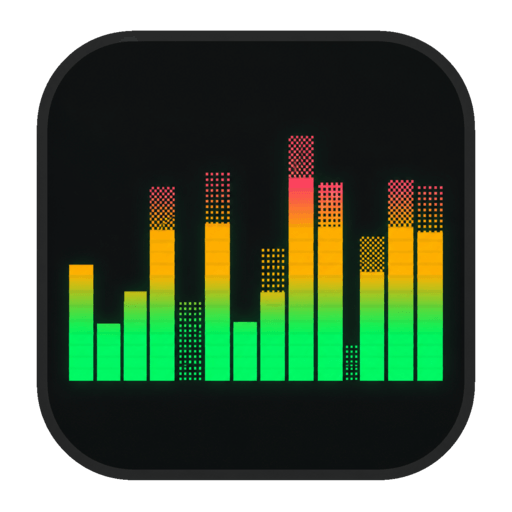
Source: cliamp Cliamp.png from the repo root. Shows the player chrome — track list, controls, visualizer, EQ strip — in the Winamp-tribute layout.
- Cross-link aethertune.md for the more rigorous visualizer pipeline (real FFT, CAVA-inspired gravity falloff, ~94 fps). cliamp is the aesthetic visualizer reference; AetherTune is the engineering visualizer reference.
- Cross-link pulsedeck.md for the cassette-deck metaphor — both cliamp and PulseDeck commit hard to a retro-software identity, and that commitment is part of why their UIs land.
- The Bubble Tea framing is the structural takeaway. If KN-86 commits to the Charm stack (bubble-tea.md, lip-gloss.md), cliamp is a useful reference architecture to study — it shows how the framework actually feels when you build something dense and committed on it.